
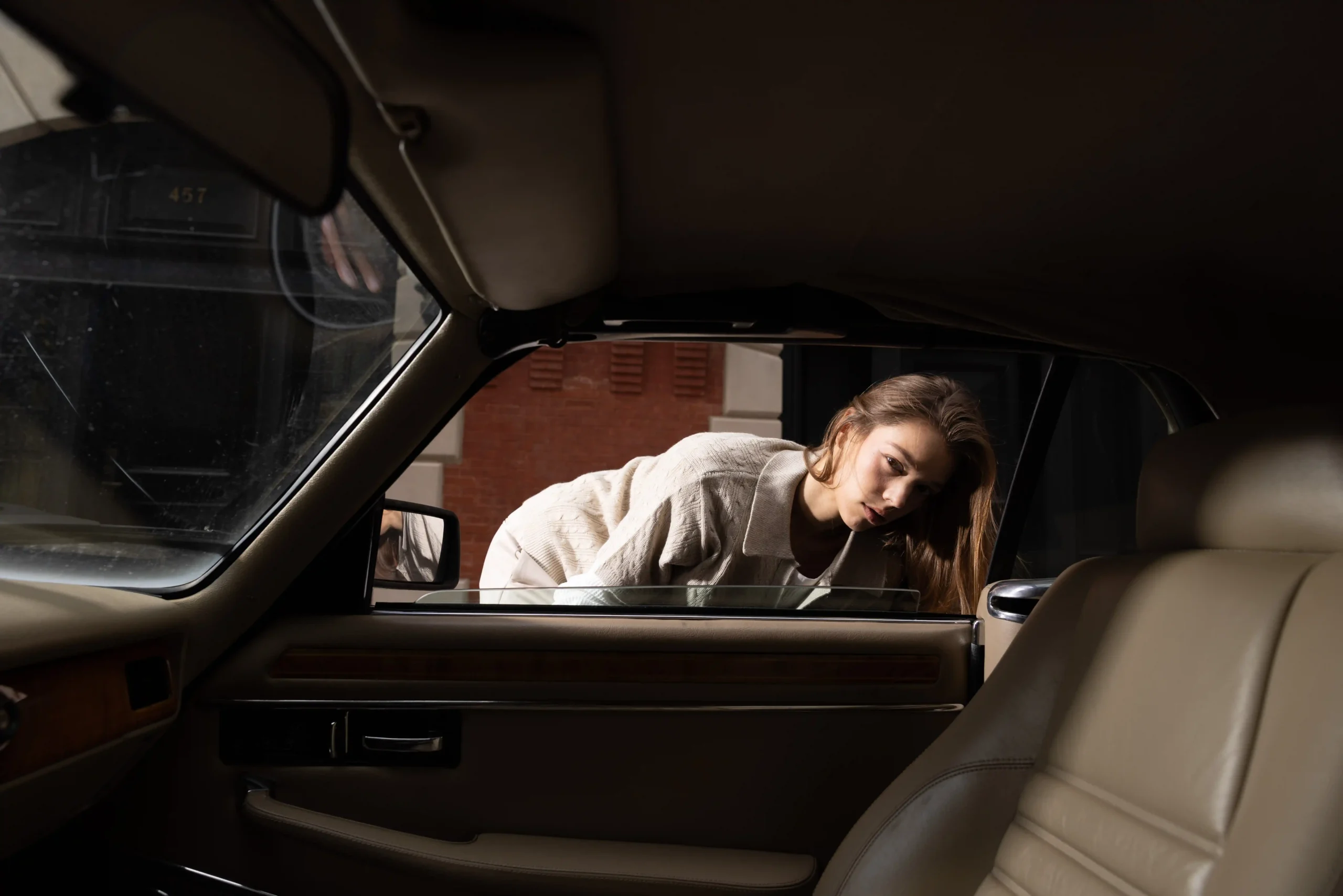
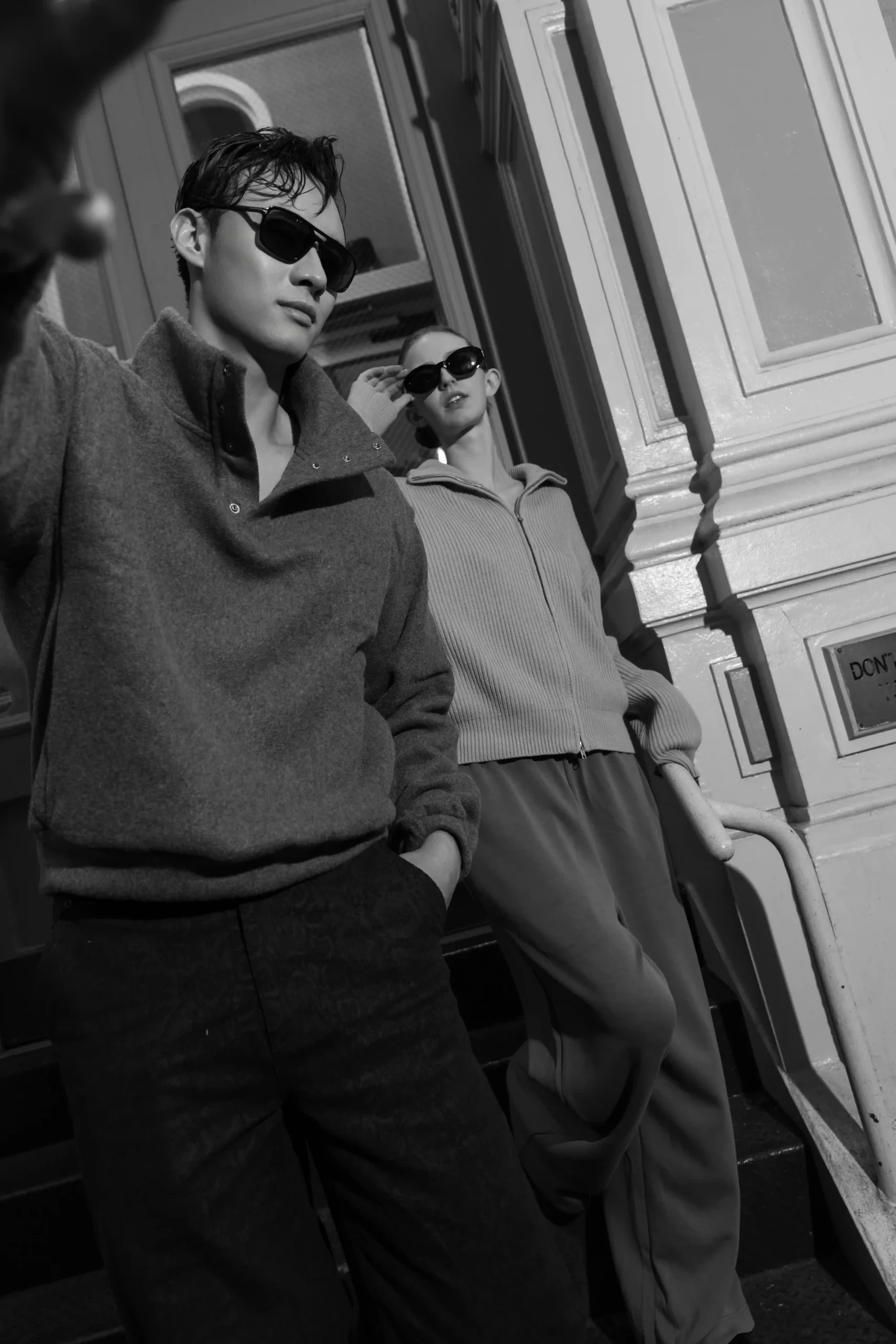
In Retro 21, Jiaming Deng approaches fashion as atmosphere rather than narrative, capturing quiet, unhurried moments where body, garment, and landscape coexist. Through natural light and restrained gestures, the series unfolds like a paused film—inviting the viewer into a state of presence, softness, and contemporary stillness.
Your work often sits between fashion and cinema. How did you approach Retro 21 from a storytelling perspective?
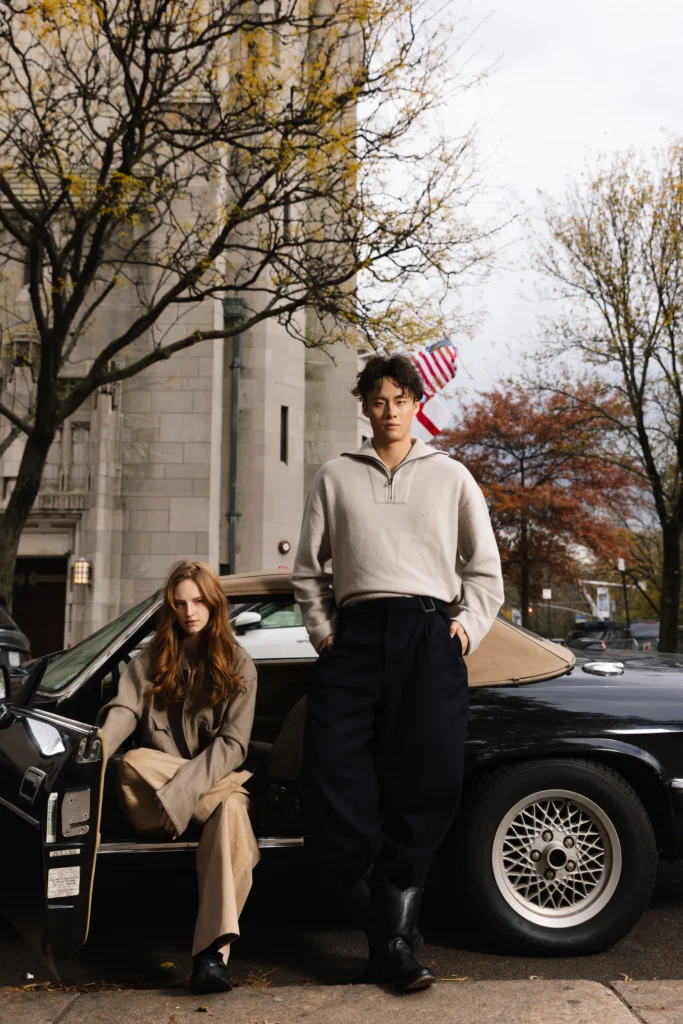
I didn’t want to “tell” a story in the traditional narrative sense. Instead, I approached Retro 21 as an atmosphere — something closer to a paused film than a plotted sequence. The vintage car, the garments, the open landscape were not props but characters existing in the same quiet moment.
My role was to observe how they coexist rather than choreograph them. I treated each frame like a still from an unseen film, where the viewer arrives in the middle of a feeling rather than at the beginning of an explanation.
Retro 21 frames “retro” as a state of mind rather than a visual reference. How did that idea influence your photographic language?
That idea freed me from imitation. If retro is a state of mind, then it’s about rhythm, slowness, and ease — not about making images look old.
The vintage car on set became a metaphor rather than a symbol: it carried time without being trapped by it. I focused on textures, breathing space, and the natural posture of the body so the images could feel contemporary yet unhurried, like memories happening in the present.
The images feel restrained and observational rather than performative. What draws you to this quieter form of expression?
I’ve always believed that fashion doesn’t need to shout. Real intimacy appears when nothing is being proven.
I’m drawn to the moments between actions — when a model adjusts her sleeve, looks away, or simply stands without intention. Those small hesitations feel more truthful than any gesture designed for the camera.
How do you create space for the body to appear relaxed and unguarded in front of your camera?
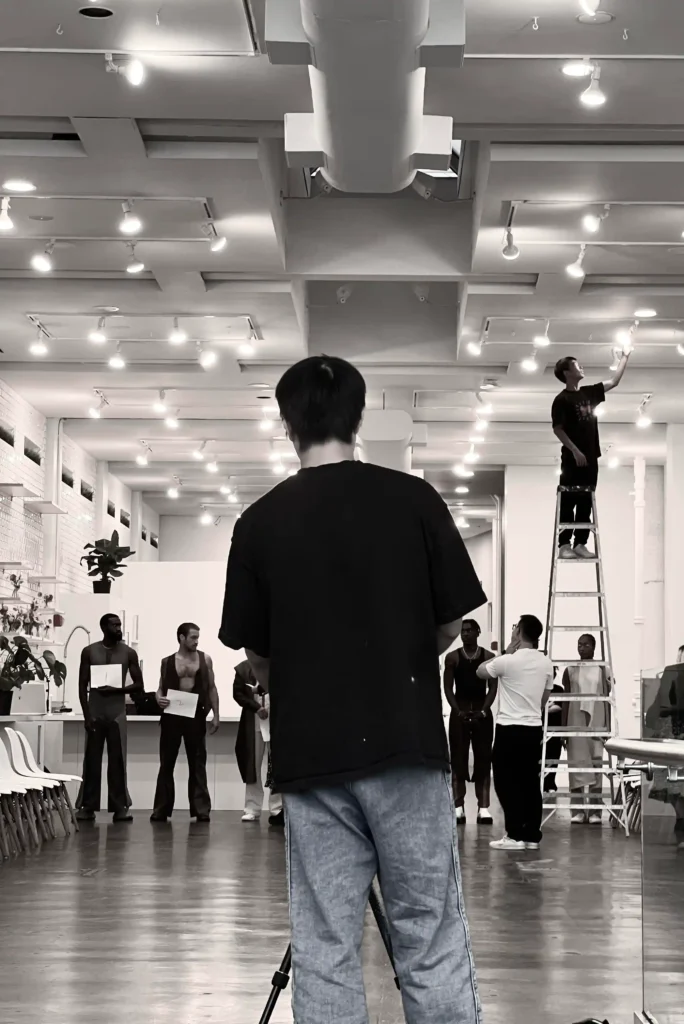
By removing the idea of “performance.” I speak very little on set and let time do the directing.
For this shoot, we let the model walk around the car, touch the metal, sit on the grass. When the body is given something real to feel — sunlight, wind, texture — it forgets the camera. That’s when photographs begin.
In this project, identity feels softened rather than constructed. How do you translate that sensibility through framing and light?
I avoided heroic angles and dramatic lighting. Most frames were shot at eye level with natural light so the subject wouldn’t become an icon but a presence.
Soft shadows, open compositions, and distance allow identity to remain fluid — closer to a mood than a declaration.
Clothing in Retro 21 accompanies the body instead of defining it. How did that shift your approach to photographing fashion?
I stopped thinking about “showing the clothes” and started thinking about “hosting the person.”
The garments acted like companions — flexible, calm, everyday. My job was to protect that humility, not to turn it into spectacle.
The dialogue between body and landscape is central to the imagery. What role does nature play in shaping your visual narratives?
Nature is a neutral witness. It doesn’t judge, it only receives.
Placing the vintage car and the model inside that openness dissolved any artificial timeline. The body could exist simply as part of the environment, which aligns perfectly with Retro 21’s idea of a natural human state.
How does working outdoors change your relationship with time, rhythm, and spontaneity on set?
Outdoors, you cannot command time — you negotiate with it. Clouds move, light shifts, silence expands.
That unpredictability keeps me alert and humble. Many of the best frames happened while we were “not shooting.”
Your imagery often carries a cinematic stillness. Do you think in sequences when you shoot, or do images emerge intuitively?
Both. I arrive with a loose emotional map, but the real sequence is discovered on site.
The car, the wind, the model’s mood — they edit the film for me. I only recognize the story after it has already happened.
What conversations with the creative team helped define the emotional tone of Retro 21?
We spoke less about references and more about feelings — comfort, anonymity, breathing.
The team insisted that Retro 21 is not about nostalgia but about a gentle way of living. That became our compass.
How do you balance authorship with collaboration when working on concept-driven projects like this?
Authorship for me is the ability to listen clearly.
I bring a visual instinct, but the project belongs to a shared emotion. My task is to translate it faithfully, not to dominate it.
Your work has appeared in Harper’s Bazaar, ELLE, L’Officiel, and Cosmopolitan. How do personal projects differ from editorial commissions for you?
Editorial work is a dialogue with an audience; personal projects are conversations with myself.
Retro 21 sat beautifully in between — a commission that felt like a personal confession.
On a personal level, what aspects of yourself do you feel are present in this series?
Probably my desire to live slower than the industry allows.
I see my own fatigue with spectacle and my longing for ordinary tenderness.
Was there a specific moment during the shoot that captured the essence of Retro 21 for you?
Yes — when the model leaned against the old car without posing, just watching the horizon.
Nothing was happening, and everything was happening. That was Retro 21.
Looking forward, how do you see your visual language evolving as fashion becomes more introspective and less performative?
I hope to move further toward silence — images that feel like breathing rather than statements.
Fashion is returning to the human scale, and I want my work to be a space where people can simply exist.